Written regulations, not verbal ones
Request the printed rules covering maximum height, base width, permitted materials and whether kerbing or vases are allowed. A staff member's recollection is not something you can hold anyone to later.
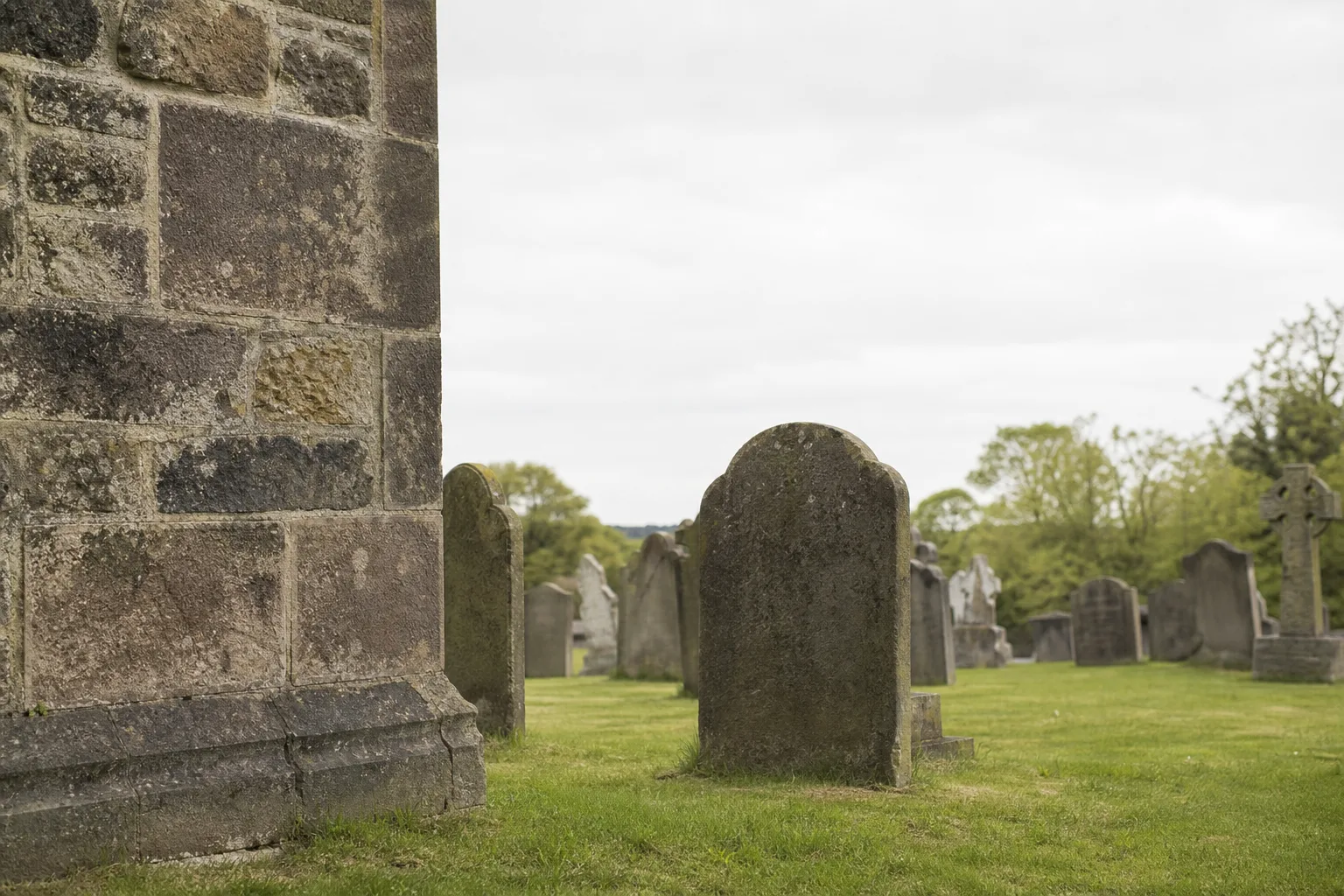
Buying a grave buys control over who is buried there and what marker goes on it, not ownership of the soil. That right is recorded on a deed or certificate held by the cemetery office.
The same burial ground may allow full uprights in an older section and only flush bronze markers in a newer lawn section. Always ask which section the plot sits in, not just which cemetery.
Request the printed rules covering maximum height, base width, permitted materials and whether kerbing or vases are allowed. A staff member's recollection is not something you can hold anyone to later.
Church and diocesan burial grounds often route wording, symbols and material through their own review committee. Build that approval time into the schedule before promising anyone a date.
The monument company charges for the stone, the lettering, delivery and setting. The cemetery charges separately for a permit, sometimes a foundation poured by its own crew, and often a care fund contribution scaled to the base size.
Almost everyone starts in the same place, which is a photograph of a stone they liked, or a design book handed across a desk in a showroom. That is a reasonable place to start thinking and a poor place to start spending, because the design is the fourth or fifth decision in the sequence, not the first. Before a monument company can accept an order and quote a firm price, somebody has to establish who legally controls the grave, and the cemetery has to say what it will allow on it. Get those two settled and the rest moves quickly.
When a grave is bought, what changes hands is not the land but the exclusive right of interment: the authority to say who is buried there and what marker goes on top. That right is recorded on a deed or certificate held by the cemetery, and it belongs to a named person, who is very often not the person now arranging the stone. If the rights holder has died, the right passes through the estate, and the cemetery office will want something in writing. An executor's letter, a copy of the will, or an affidavit of heirship signed by the next of kin is usually enough. Transferring the record into a living name typically carries a small administrative fee.
This is the stage that quietly costs people months. A family orders a stone in March, the mason cuts it, and in June the cemetery declines to accept it because the deed still sits in the name of a great-aunt in another state whose signature nobody can get. Ask the cemetery office, early and directly, whose name is on the record and what they need to see in order to change it. That conversation is free, takes ten minutes, and is the single most useful thing you can do before spending anything.
Every burial ground publishes rules, and they vary far more than people expect. A municipal cemetery may permit uprights in one section and only flush bronze markers in another. A memorial park may require that markers be bought through the park itself, or may allow outside monument companies on payment of a setting or inspection fee. Church-owned and diocesan grounds often add their own approval step, with a committee reviewing wording, symbols and material before anything is cut. Get the written regulations, not a verbal summary, and read the parts on maximum height, base width, permitted stone, and whether kerbing or vases are allowed.
Only once you know the envelope does looking at designs make sense. Browsing cemetery monuments with the section rules beside you saves the particular disappointment of falling for a shape that section will never take. It also sharpens the price conversation, because a granite upright, a slant marker and a flush bronze plaque sit at genuinely different levels of cost, and knowing which category you are in narrows the range straight away.
A monument price generally bundles the stone itself, the shaping and polishing, the sandblasted or laser-etched lettering, delivery, and setting on a foundation. What sits outside it is usually the cemetery's own charges: a permit or marker fee, a foundation poured by the cemetery's crew if they insist on doing it themselves, and in many places a contribution to a perpetual care fund tied to the size of the base. Some cemeteries also charge for opening the ground for a cremation interment later. Ask both parties for their numbers in writing on the same day, then add them together, because either figure alone understates the total.
Consumer protection in the funeral trade sits with the Federal Trade Commission, whose remit covers how prices are disclosed to families making these arrangements. That backdrop is useful to keep in mind: you are entitled to itemized figures, and a company that will not separate the stone from the setting from the lettering is one to press harder. Later additions matter too. A second inscription cut on site, years on, is priced per letter or per line and billed as its own job.
Once the design is approved and the deposit paid, the shop produces a proof: a scaled drawing showing the stone's dimensions, the exact wording, dates, and any emblem. Read it letter by letter, out loud, with a second person checking against a birth certificate and a death certificate. Granite does not permit corrections. Sign it only when you are certain, because your signature is what transfers responsibility for spelling from the shop to you. Production time depends on quarry stock and on whether the design needs custom shaping, and busy shops run seasonal backlogs through the warmer months.
Then comes the wait most families are not warned about. Fresh grave fill settles, and a heavy stone set too early tips, sinks at one corner, or cracks its own base. Cemeteries commonly ask for several months of settling before a full monument goes on, and some specify a full year. A temporary marker, often a metal frame with a printed card, holds the place meanwhile at little or no cost.
The crew arrives with the stone, digs or checks the foundation, levels the base, and beds the die on it with a mortar or adhesive joint. Setting takes an hour or two for most markers. Ask the shop to photograph the finished work, keep the final invoice and the cemetery's permit together, and note what the guarantee covers, which is normally workmanship and settling rather than vandalism or weather.
Done in this order, the money goes out in three predictable stages: a modest administrative fee to fix the paperwork, the cemetery's permit and foundation charges, and the monument itself. Families who work backward from a design photograph tend to pay all three anyway, just later and with more friction in between.