Quoted stone dimensions
Always get length, width and thickness in writing for both the tablet and its base. Two markers that look identical in a catalog photo can differ by an inch of thickness, and that inch is a real part of the price gap.
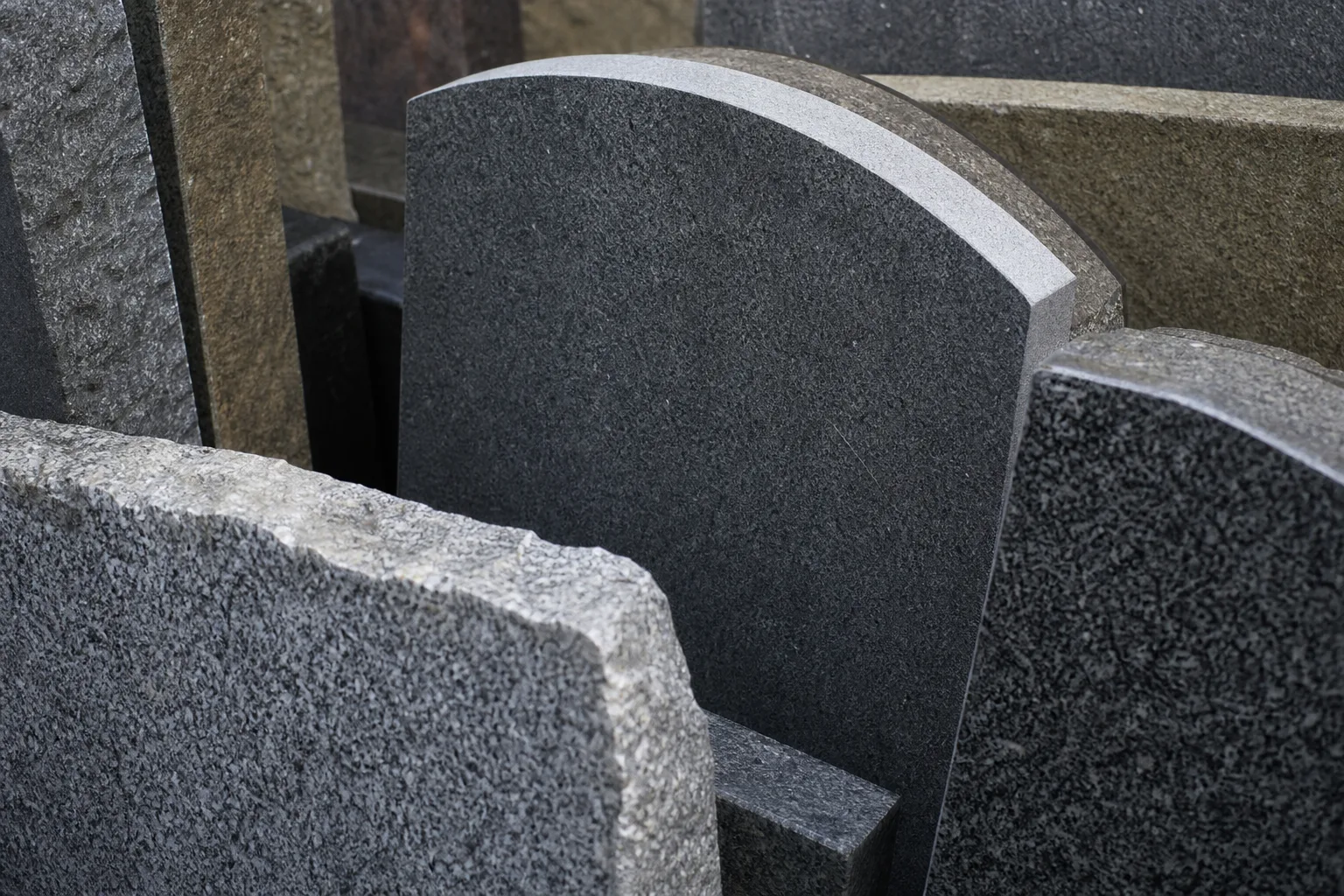
Always get length, width and thickness in writing for both the tablet and its base. Two markers that look identical in a catalog photo can differ by an inch of thickness, and that inch is a real part of the price gap.
Granite is priced partly by how many faces are polished rather than left rough or sawn. A stone polished front, back and top costs more than one polished on the front only, even in the same color.
Many shops include a set number of characters in the base price, then charge per letter after that. A long verse or a maiden name in parentheses can quietly push you past the allowance.
Sandblasted letters can be left with a frosted recessed surface or filled with paint for contrast. Paint reads more sharply at first but needs renewing, and it usually appears as a separate line.
Two monument dealers can quote the same family for what looks like the same gray granite marker and land four figures apart, and neither of them is doing anything wrong. The gap is almost never the rock. It sits in what the total silently includes: the concrete under the stone, the crew that sets it, the permit the cemetery charges, and whether the price assumes one inscription now or leaves room for a second one later. A quote is a bundle. Reading it means pulling the bundle apart and asking which pieces are missing.
Granite is priced by the block it came from, the size of the finished piece, and how many faces are polished. A common domestic gray costs less than an imported black or a red, and a two-piece monument with a separate base costs more than a flat marker of the same footprint because there is more material and more handling. Thickness matters more than height for durability, and a dealer who quotes a four-inch tablet against a competitor's three-inch tablet is not selling you the same object. Ask for dimensions in writing, all three of them.
Sandblast lettering is cut into the face through a rubber stencil, and the price generally moves with the character count, the size of the letters, and whether the recessed surface is left frosted or painted. Some shops quote a fixed allowance, say a name, two dates and a short line of verse, then bill per letter beyond it. Ornament is separate: an etched portrait, a laser image, a carved rose or a religious emblem each carries its own charge. Applied bronze letters and ceramic photographs are a different product entirely, priced as hardware, and they are not always permitted.
A monument does not sit on dirt. It sits on a poured concrete foundation or a manufactured base, sized to the stone and dug below the local frost line, and that pour is often quoted by the cemetery rather than the dealer, or by the dealer as a pass-through with a markup. Setting is the labor of hauling the stone in, leveling it, and bedding it with adhesive or mortar. Some quotes fold both into the total. Some list neither. The question worth asking out loud is who pours, who sets, and who returns if it settles.
Burial grounds run their own fee schedules, and those fees are not the dealer's revenue. Expect a permit or installation fee for allowing a monument on the lot, sometimes a foundation charge billed by the square inch or by the running foot, occasionally a perpetual care assessment tied to the memorial rather than the grave. Church-owned grounds may add a review by the vestry or the diocese before anything is approved, with its own filing fee. The Federal Trade Commission oversees how funeral goods and services are disclosed and priced to consumers, and the same instinct applies here: ask for the schedule in writing before you sign.
On a double marker, the surviving spouse's dates get cut later, usually in the cemetery rather than the shop, and that job is priced as its own small project. It carries a trip charge, the setup of a portable blast unit or a hand-cut stencil, the letters themselves, and sometimes a fresh cemetery permit because a crew is working on the lot again. Cleaning the stone so the new work matches the old adds a little more. Nobody can quote 2040 pricing today, but a good dealer will tell you what that job costs this year and note the current fee on your file.
The useful comparison is not dealer against dealer on the bottom line. It is line against line: same granite grade, same thickness, same polish, same letter count, foundation included or excluded, setting included or excluded, cemetery fees named or left out. Ask each shop to quote the identical specification and the spread usually collapses to something explainable, which is exactly the point at which you can choose on workmanship and on who will still be in business when the second date needs cutting.